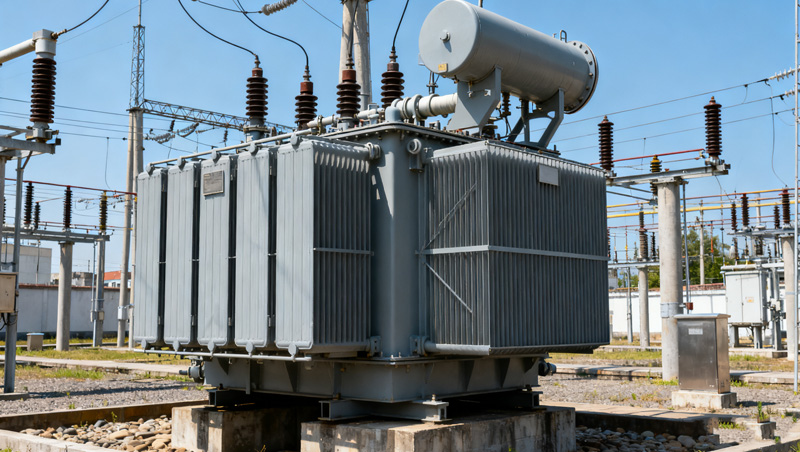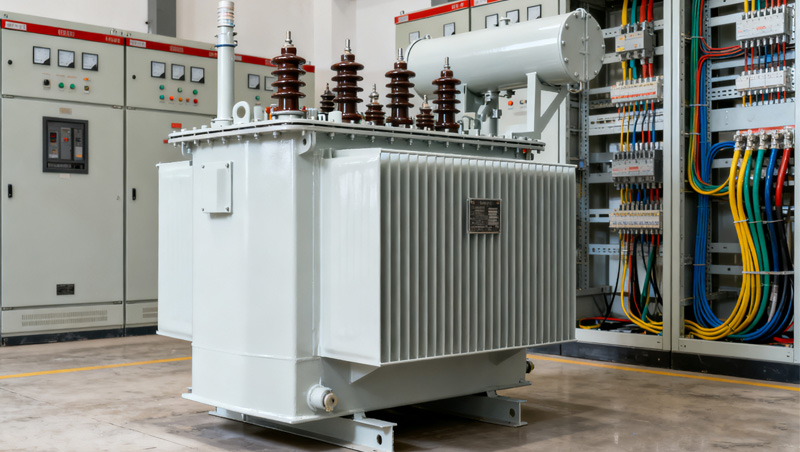
How primary and secondary bushings serve different roles in pad-mounted distribution transformers.
Why Padmount Transformers Need Bushings
A bushing lets an energized conductor pass through the grounded transformer enclosure while maintaining electrical insulation. It also forms a mechanical connection point for the external cable system.
The original article separates primary and secondary interfaces because their electrical duties and connection methods differ.
Primary and Secondary Interfaces
Primary bushings connect the incoming medium-voltage distribution circuit. The guide discusses shielded interfaces designed for cable connection and maintenance in pad-mounted equipment.
Secondary bushings connect the transformer output to downstream loads. Although their voltage is lower, the conductor and terminal arrangement must suit the higher current on that side.
Loadbreak and Deadbreak Connections
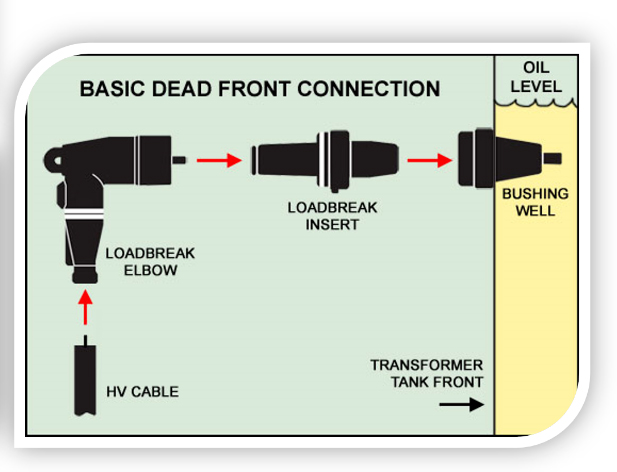
The source guide describes 200 A loadbreak bushing interfaces and 600 A deadbreak interfaces as different connection families. Their operating procedures and compatible connectors are not interchangeable.
A deadbreak connection must be de-energized before disconnection. The correct interface depends on the transformer design, system rating and specified cable accessories.
What to Confirm Before Ordering
Check voltage class, current duty, mating connector, mounting detail and the transformer compartment layout. Drawings and model references help distinguish parts that may look similar in a photograph.
For a replacement requirement, provide the existing component identification and interface dimensions for compatibility review.